


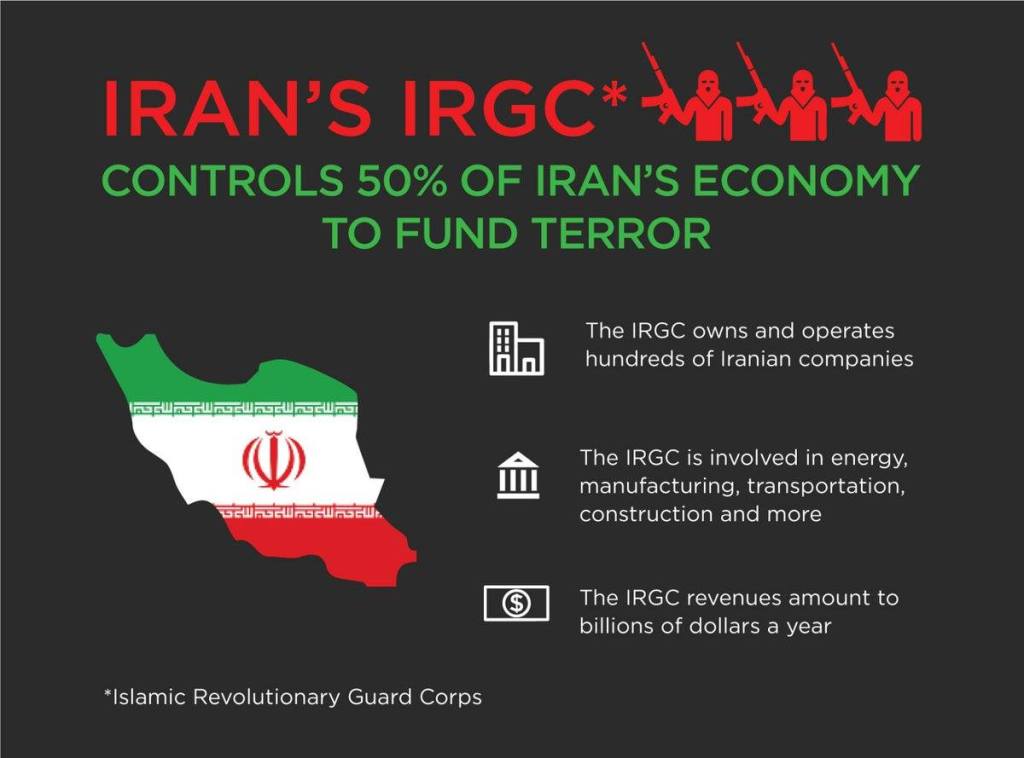
It’s really something to have a country with an educated young population, abundant resources that most countries would dream of, natural beauty and varying unique ecosystems, incredible food and culture, engineering ingenuity and historical prominence in a strategic part of the world – and systematically try and break it. To take its people to the edge of poverty and despair. To deplete it of its riches. To drive its people to flee legally or illegally overseas for want of a better life. That’s quite the achievement. That’s the incompetence of the Islamic regime.
I left Iran when young. It was a long time before I returned to visit, and I have returned since, many times. Each time, I noticed my home town in Khuzastan go backwards – not forwards. The streets dirtier, potholes in roads larger, infrastructure worse, the air more polluted. How could it be that people living in a country with abundant wealth were becoming poorer – day by day. How could it be that some were getting extremely rich and others unable to eat.
You don’t need to go further than to look at photos of places in the South of Iran – from places such as Sistan Baluchistan and contrast it to this Instagram account: @richkidsoftehran to see the chasm between the haves and the have nots.
This vile inequality is something that should never be normalized and underpins the despair that is leading to the revolutionary movement we see before our eyes.
And what of countries like Australia, USA, Canada and Europe? What is their role? I have already posted about the diplomatic relations that is keeping this Islamic regime afloat. What I want to do now is to unpack the reasons why countries like Australia are not imposing harsher sanctions. What’s in it for them? As always, we need to follow the money trail, because the money trail informs political will, which informs policy. We need to address the business, binds because it is one of the key barriers to a change in policy.
Starting close to home – Australia.
Australia
Australian exports to Iran was around $70 million in 2022. This being an increase on levels over the last 4- 5 years (there is an upwards trajectory) and the balance is in in Australia’s favour.

When looking at this graph though, you will notice of course that there was a major spike in 2013 and 2014. A lot the fluctuations have to do with Iran’s nuclear program and how it was being used to increase trade. Following the Obama nuclear deal in 2015 – the world was aflutter with the prospect of a new market for their goods (Iran has a population of 85 million). So they all lined up to visit and sign deals. Australia’s Foreign Minister at the time – Julie Bishop – was among them. Donning the hijab much to the despair of women in Iran fighting to end necessary hijab, she visited and opened the way for a trade delegation to visit Iran, led by Steve Ciobo, the then Tourism, Trade and Investment Minister.

He re-opened the Australian Trade Office in Tehran and took with him representatives from: Blackmores, Cochlear, GrainCorp, LiveCorp, WorleyParsons and the universities of Melbourne and Sydney and later Australian National University.
Many of these businesses signed deals with Iran which they maintain, even in the face of gross human rights violations by their business partner.
Australian National University in 2017 boasted in leading first dialogue with Iran in 10 years. Key personnel visited Tehran and met with officials directly related to the abusing regime: ‘The Australian delegation also held talks with education officials on boosting ties between ANU and Iran, and met senior Iranian dignitaries including former Iranian foreign ministers, Dr Ali Akbar Velayati and Dr Kamal Kharazi, who are both senior advisors to Iran’s Supreme Leader, Ayatollah Ali Khamenei.’ (https://www.anu.edu.au/news/all-news/anu-leads-first-australia-iran-dialogue-in-a-decade)
In return when Javad Zarif, the then Foreign Minister came to Australia on a visit, he gave a speech at ANU. Of note, the professor at ANU and during the visit – Professor Amin Saikal (now at University of Western Australia) has often commented on Iranian issues that feeds through regime lines, specifically from the ‘reformist’ camp (sanctions are bad for Iranian people, rather than the regime, Iran and US are about to go to war (no they’re not), US is to blame for many ills, let’s talk and work it out (the regime is un-reformable).
Further to the Javad Zarif visit, he spoke against the treatment of refuges by Australia ,then went on to also criticise refugees from Iran – calling them liars and saying they have to pay a price for fleeing: “People who use human rights for political reasons…people who make the arguments have to pay for it,” he said.

Business interests backed by the Australian government continue today, with a recent visit by businessmen facilitated by the Australian ambassador in June 2023.
Canada
Canada and Iran supposedly broke diplomatic relations in 2012 following years of tension following the murder of Canadian woman Zahra Kazemi in police custody in Iran in 2003. So it is surprising to see that despite this, such significant trade between the two countries, especially also, after the Revolutionary Guards shot down a Ukrainian passenger flight enroute to Canada in 2020.
Justin Trudeau despite words, has shown himself to be more of a friend to the Islamic regime, than Iranian people, as he has actively worked to re-establish relations with a big increase in trade ensuing.
Despite ‘sanctions’ business continues.
Germany
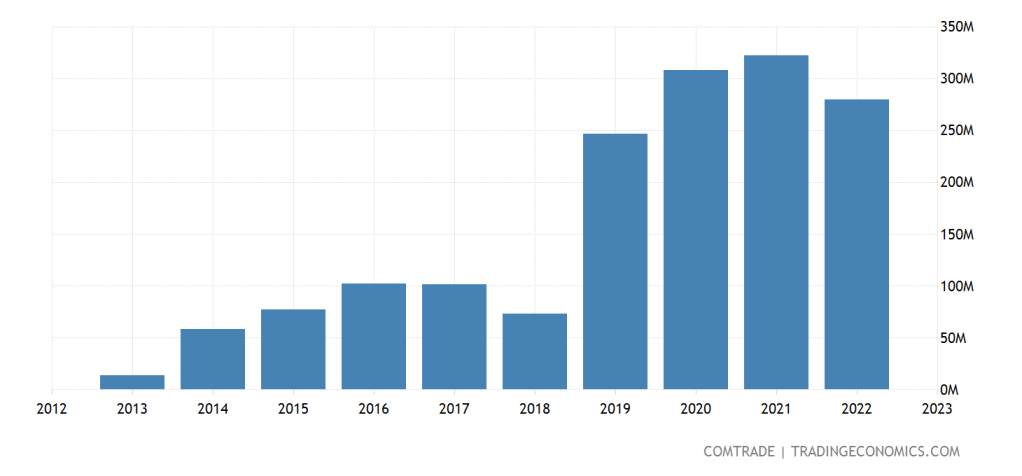
Germany is Iran’s biggest trade partner in Europe and one of its biggest trade partners full stop. While trade is dropping, Germany still earnt over $1 billion from Iran since the start of the #womanlifefreedom revolution. Known regime lobbyist Adnan Tabatabai (direct family relation of Khomeini) is closely aligned to the German government and as recently as February this year, signed a 2 year consultancy advisory contract with the German government.
While the graph below shows a reduction on trade, this has mostly had to do with Covid, than specifically human rights decisions.

United Kingdom
The UK has had a complicated relationship with Iran throughout its history. When Rishi Sunak came into office, he promised designate the Islamic Revolutionary Guards Corps, as a terrorist organisation. That has stalled despite the numerous terrorist and kidnapping attempts on UK soil. Now, juxtapose the constant threats the Islamic regime has made on UK soil to its booking trade – an almost doubling of trade in a year and 25% in the first 4 months of this year alone – since the #womanlifefreedom revolution began.
The UK government’s own website states this priority ” the UK government supports expanding our trade relationship with Iran”.


US
While the US has many trade sanctions in place against the regime, you will have noted from my posts, that the Biden administration – in its desperation to sign another nuclear deal – is finding back channels to feed Iran’s coffers. In fact, Iran’s foreign currency reserves have gone from $4 billion in 2020 to $46 billion or more today – due to the Biden administration’s lax sanctions enforcement. Daily, there are reports of more billions being funnelled to the mullahs in Iran through loopholes and backroom deals.
What doe all of this mean?
What it means is that most Western countries say that they stand with the people of Iran, but continue to make money out of Iran and fund its regime.
For those that argue that open trade is the salvation of Iranian people, I ask – why have Iranian’s living standards gone backwards in the face of improved trade from 2014? Why has more business not resulted in greater freedoms for Iranian people? Why do these governments feel they need to be opaque in their business dealings with Iran and continually bend the truth? If their conscience was clear, wouldn’t they be reporting on the success of this engagement, rather than making symbolic pronouncements in front of cameras and continuing to fund the dictator behind the scenes?
What you can do
There are a lot of companies directly benefiting from the current dictatorial regime. These companies need to be called out, named and shamed – and boycotted.
- Please go to: LINK Search the database. Do you see a brand that you buy listed? Boycott them – then use social media to highlight these companies’ business dealings. I’ve provided wording that you can use.
We can all play a positive role for the people of Iran and using your purchasing power is one of the easiest ways to drive home the message to these companies that they should stand with the people of Iran and not their oppressors. - You can write to your Trade Ministers ask them to stop trading with the Islamic Republic.
- Follow me on Instagram @women.life.freedom_023 to stay up to date with various campaigns to help Women, Life, Freedom

 Women, Life, Freedom