


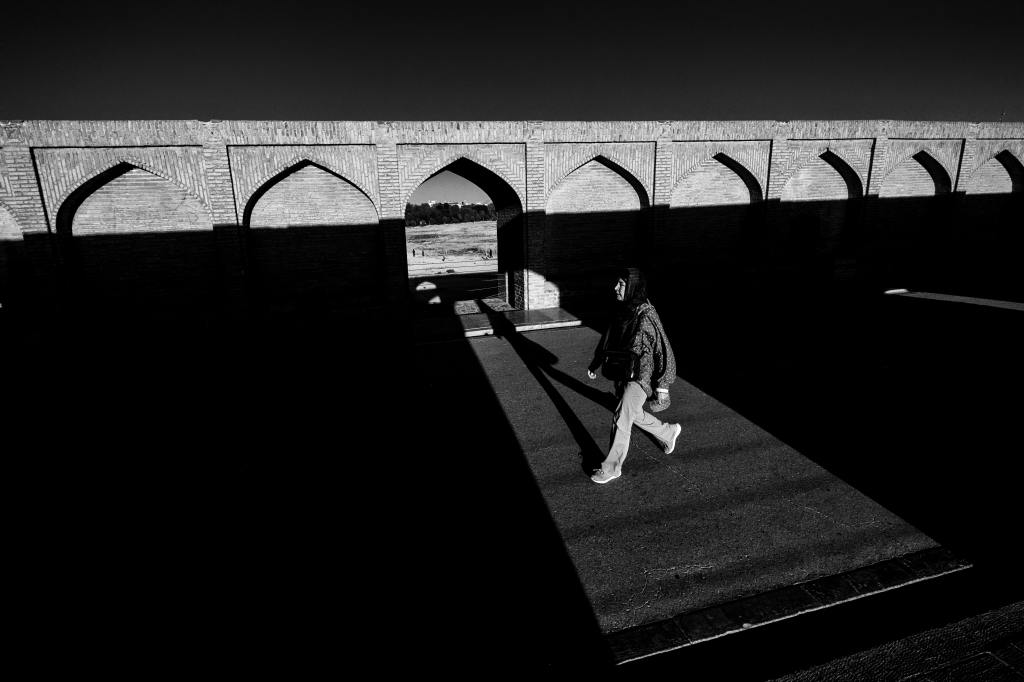
Femicide, which is the deliberate killing of women and girls because of their gender, is increasing at an alarming rate in Iran.
While this is not unique to Iran, its rise is a further symbol of the struggle of women against gender stereotypes, and gender apartheid. Globally, it’s estimated that one woman is killed every ten minutes.
The reasons for gender based violence are varied with most carried out by partners and family members. These close associations account for 60% of femicide murders globally.
In Iran, violence against women is intertwined with traditional roles, a conservative society, and systematic discriminatory legal structures.
Woman, Life, Freedom – the movement that sprung up after the death in custody of Mahsa Amini is in direct response to gender based violence, and its prevalence in Iran and experienced in different forms by many women and girls.
The scale of the problem is difficult to quantify, as many cases go unreported. However, high profile cases such as that of Mona Heydari, underscore the different elements of this issue. Married off at the age of 12, she had a son at age 14. Following years of abuse, she sought a divorce, but was denied this by her husband. Escaping briefly to Turkey, she was lured back, then murdered and beheaded by her husband.
Images of him carrying her severed head outside their home went viral. In a case that speaks to the pervasive nature of femicide, her parents forgave him for killing their daughter, and he received a light sentence of eight years in prison.
This example is emblematic of the causes of femicide in Iran which are mostly driven by women trying to leave an abusive relationship, seeking divorce or bringing apparent ‘dishonour’ to the family by entering a relationship.
The penal code in Iran not only lacks rigour in response to cases of femicide, it could be said that it is part of the problem, thus perpetuates and promotes violence against women. For example, Article 630 of Iran’s Islamic Penal Code states: “Whenever a man sees his wife committing adultery with a man and knows that the wife has consented to it, he can kill both of them.”; and Article 302 of the same Code states that a man can legally kill a person for committing a crime that is punishable by death under Sharia (Islamic) law, such as adultery. *
Sadly, the situation is becoming worse. “According to Stop Femicide in Iran (SFI), there were 93 known acts of femicide in Iran in just the first half of 2024, a near 60 percent increase over the same period in 2023, and 149 known femicides in 2023, averaging nearly one murder every other day”*.
It should be noted that these cases are spread across the country, and across different socio-economic backgrounds.
Recent cases such as these described below have brought the pervasive crime of femicide into the spotlight:
- Fatameh Soltani (18 years) who was killed by her father outside her workplace
- Elahe Hossein Nejad (24) who was found dead in the outskirts of Tehran after being abducted in broad daylight on her way home from work.
- Kabra Rezaei (26) an Afghan national whose mutilated body was found in the desert of Hisarak.
While these cases have been prominent online, they are only a small part of a growing problem that shows no sign of slowing down.
Reversing this trend is complicated, and relies not only on improved legal protections, but also a shift in societal attitudes and education that would take years to implement. These ultimately rely on a government committed to women’s rights and equality, which is currently not the case.
The Stop Femicide in Iran campaign works to address this issue through:
- Documenting cases accurately. This helps to identify trends and gives a human dimension to the stories of the lives taken;
- Education and knowledge sharing with Iranian groups and internationally;
- Empowerment by working with civil society in Iran to help address the root cause of femicide, and help establish methods to better protect women from violence.
We can all play a part in this human rights issue. Education and public awareness and attention can be important levers towards valuing the lives of Iran’s women and girls.

 Women, Life, Freedom